



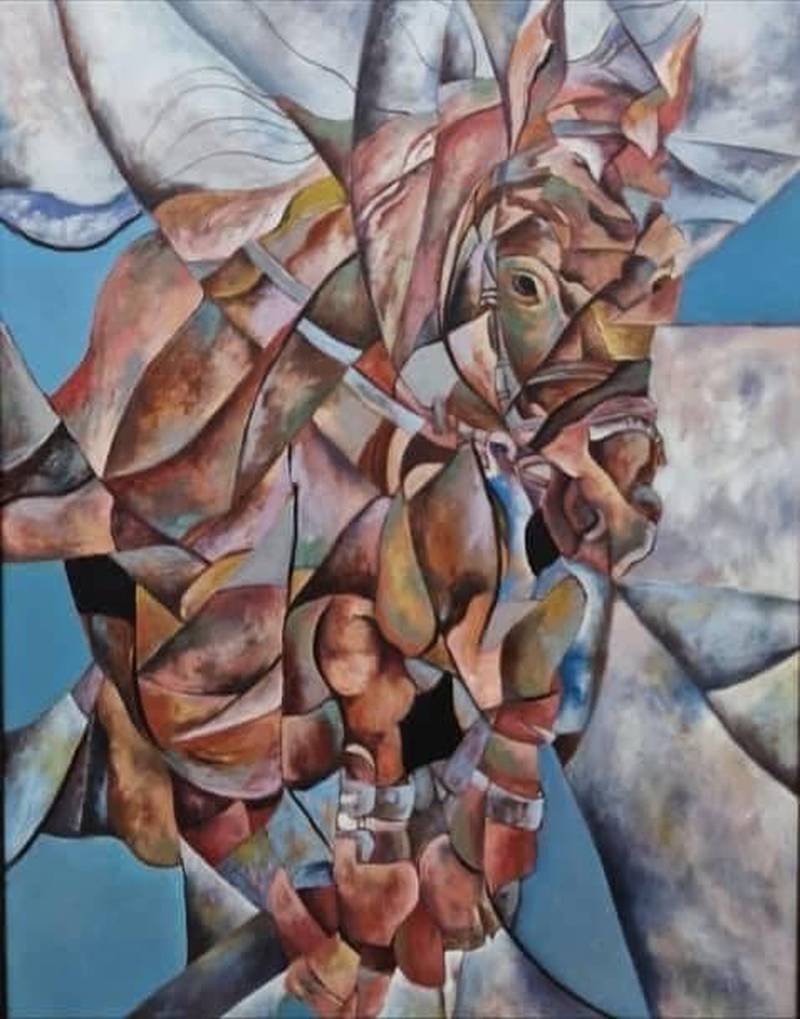
رخش" از مجموعه شاهنامه
کداثر: 217
رخش؛ بازخوانی یک اسطوره در کوبیسم
این اثر با الهام از رخش، اسب افسانهای رستم در شاهنامه، و با بهرهگیری از زبان بصری کوبیسم خلق شده است. در این نقاشی، فرمهای شکسته، سطوح هندسی و زوایای چندگانه، حرکت، قدرت و پویایی رخش را از مرزهای بازنمایی واقعگرایانه فراتر میبرند.رخش در این اثر تنها یک اسب حماسی نیست؛ او نماد وفاداری، همراهی و نیرویی است که قهرمان را در مسیر سرنوشت همراهی میکند. رویکرد کوبیستی امکان بازنگری در این شخصیت اسطورهای را از دیدگاهی معاصر فراهم میآورد و گذشته و حال را در یک ساختار بصری واحد به هم پیوند میدهد.این اثر تلاشی است برای گفتوگوی میان میراث ادبی ایران و جریانهای هنر مدرن؛ جایی که اسطوره در قالبی نو بازآفرینی میشود و معناهای تازهای از قدرت، حرکت و هویت را آشکار میسازد.
Rakhsh: Reimagining a Myth Through Cubism.
This artwork is inspired by Rakhsh, the legendary horse of Rostam in Ferdowsi’s Shahnameh, and is created through the visual language of Cubism. Fragmented forms, geometric planes, and multiple perspectives transform the image beyond realism, emphasizing movement, strength, and vitality.In this work, Rakhsh is more than an epic horse; he becomes a symbol of loyalty, companionship, and the force that accompanies the hero through destiny. The Cubist approach offers a contemporary reinterpretation of this mythical figure, bringing together the past and the present within a unified visual structure.The painting seeks to create a dialogue between Iran’s literary heritage and modern artistic movements, where myth is reborn through a new visual language and reveals fresh meanings of power, motion, and identity.






 دیگر آگهی های این فروشگاه
محصولات مشابه
دیگر آگهی های این فروشگاه
محصولات مشابه